How Do You Get to Jökulsárlón & Diamond Beach from Reykjavík?
It is roughly 380 km of Route 1 between the capital and the ice, and that number decides almost everything about your trip.
 Written with Björn Einarsson, Iceland South Coast & glacier-lagoon tour guide and local specialist
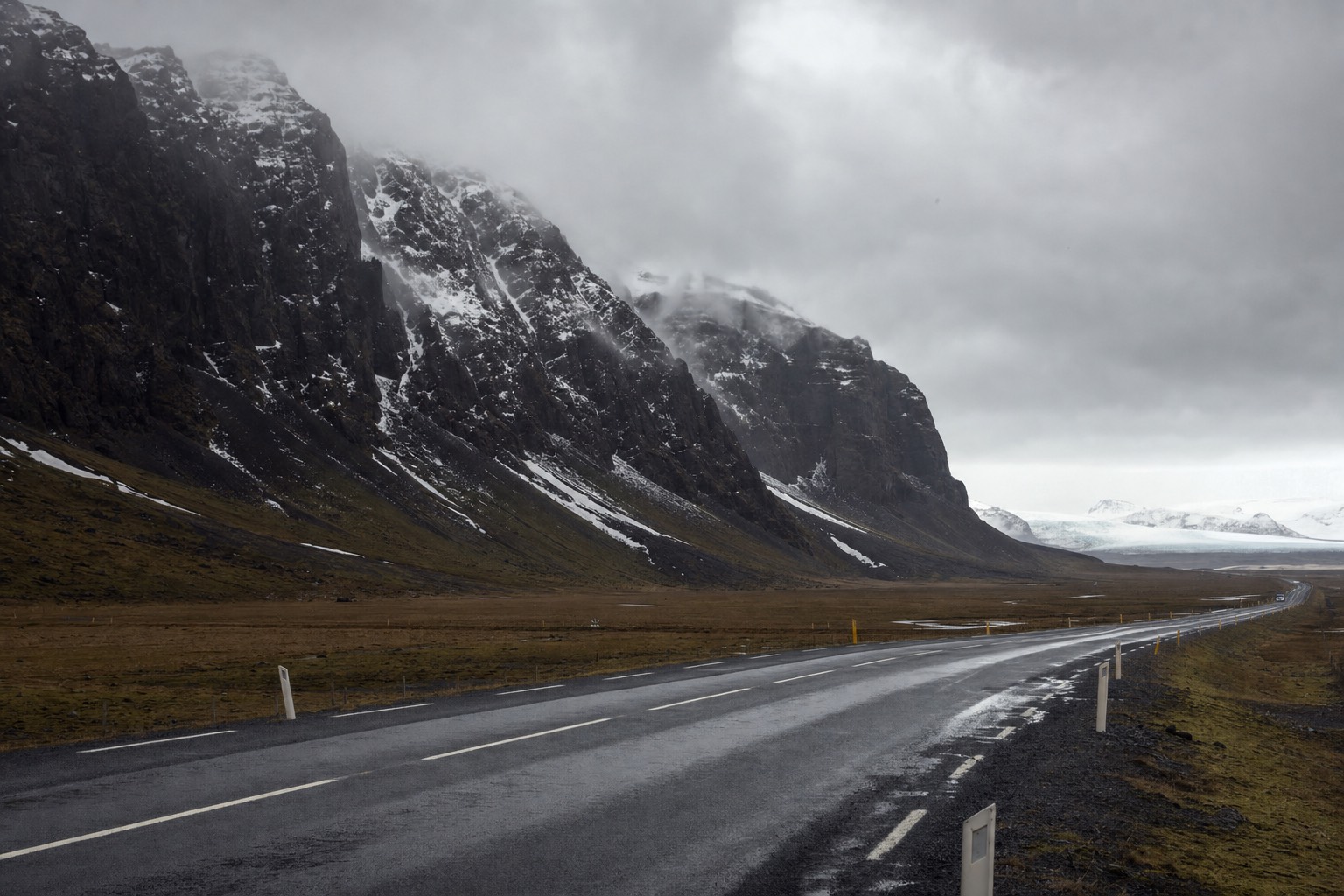
Short answer
Jökulsárlón is about 380 km east of Reykjavík, a 5 to 6 hour drive each way along Route 1, the Ring Road. There is no useful public bus, so you either self-drive the roughly 14-hour round trip, book a guided coach day tour, or split the distance over a night near Höfn.
The first time I drove clients out to Jökulsárlón, we left Reykjavík in the dark and did not see the first iceberg until early afternoon. That gap between leaving and arriving is the whole story of this trip. Everything people ask me about, whether they should rent a car, whether a day trip is madness, whether there is a bus, comes back to one stubborn number: about 380 kilometres of road, each way, most of it along a single national highway.
I guide this stretch of the south-east coast, so I have watched people underestimate it in summer and get frightened by it in winter. Here is how the journey actually works, what it costs, and how to choose between doing it yourself and letting someone else drive.
How far is Jökulsárlón from Reykjavík, and how long is the drive?
Jökulsárlón lies roughly 380 km east of Reykjavík along Route 1, the Ring Road. Realistic driving time is 5 to 6 hours each way, so the round trip is around 14 hours once you add stops. Nothing shortens it. There is no faster inland road, no shortcut, and the paved rural speed limit is 90 km/h.
That distance surprises people because Iceland looks small on a map. It is not the kilometres that stretch the day, it is the mix of speed limits, weather, and the fact that you will want to stop. Seljalandsfoss, the black-sand coast near Vík, the long lava fields past Kirkjubæjarklaustur: every one of them pulls you out of the car. Add a lunch break and a couple of photo stops and your 5-hour drive quietly becomes 6 or 7.
Breaking the route into legs makes it honest. Here is roughly how the driving time stacks up in good conditions, before any stops.
| Leg | Distance | Driving time |
|---|---|---|
| Reykjavík → Vík | ~187 km | ~2 h 30 |
| Vík → Kirkjubæjarklaustur | ~72 km | ~55 min |
| Kirkjubæjarklaustur → Jökulsárlón | ~122 km | ~1 h 35 |
| Total (one way) | ~380 km | ~5 h |
Those are moving-time figures. In winter, wind and ice can add an hour or more to any leg, and I have had trips where the Vík stretch alone doubled because of a storm rolling off the coast.
What are the three ways to get to Jökulsárlón?
There are three realistic options: a guided coach day tour that handles the whole 380 km round trip, a self-drive along Route 1 in your own rental, or a multi-day trip that breaks the distance with a night near Höfn or Vík. Each trades money, time, and effort differently, and most first-time visitors choose the guided coach.
The guided tour is the default for a reason. You sit back, someone else watches the road, and the roughly 14-hour day becomes a long but easy one. Self-driving gives you total freedom over timing and stops, which matters if you want blue hour at Diamond Beach, but it puts you behind the wheel for the hardest part of the day. The multi-day version is the most relaxed and the most expensive, and it is the one I quietly recommend to anyone travelling in December or January.
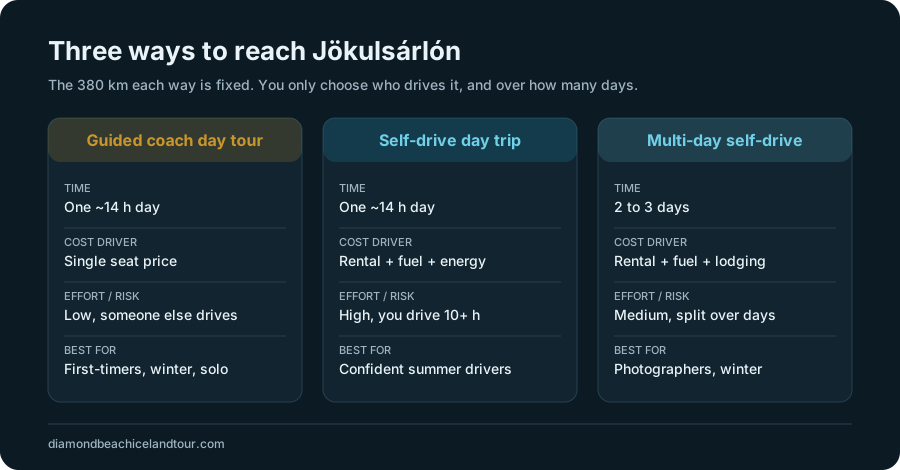
Here is the same decision as a table, weighing the three routes on what actually differs between them.
| Option | Time commitment | Rough cost driver | Effort / risk | Best for |
|---|---|---|---|---|
| Guided coach day tour | One ~14 h day | Single per-seat price | Low, someone else drives | First-timers, winter, non-drivers |
| Self-drive day trip | One ~14 h day | Rental + fuel + your energy | High, you drive 10+ h | Confident drivers, summer, flexible timing |
| Multi-day self-drive | 2 to 3 days | Rental + fuel + a night's lodging | Medium, split over days | Photographers, nervous winter drivers |
Can you reach Jökulsárlón by public bus?
Not in any practical sense. There is no dedicated bus to the lagoon and no scheduled service that lets you visit and return in a day. One long-distance coach runs along the south coast toward Höfn, but it is infrequent, does not operate every day, and its timing makes a same-day visit impossible. Treat public transport as a non-option here.
I get this question a lot from travellers who happily use buses in Reykjavík and assume the country works the same way. It does not. The capital's city network stops well short of this coast, and the one long-distance route that goes anywhere near Jökulsárlón is built for people relocating along the Ring Road, not for sightseeing. You could ride it out and be stranded, because the return timing does not line up with any reasonable window at the lagoon.
So in real terms your choices collapse to two: drive yourself, or let a coach tour drive you. That is why the guided day trip dominates this particular attraction in a way it does not for closer sights like the Golden Circle, where self-driving is easy and buses at least exist.
How much does self-driving to Jökulsárlón cost?
Budget for two things: the rental and the fuel. A small economy car runs from around 40 to 65 USD per day depending on season, and petrol in Iceland sits near 217 ISK per litre, among the highest in Europe. The 760 km round trip alone burns a meaningful tank, so the drive is rarely as cheap as splitting a tour price feels.
People assume self-driving always beats a tour on price. For two or more travellers sharing a car it often does. Solo, the maths flips fast, because you carry the entire rental and fuel bill yourself against a single tour seat. Winter tyres, gravel-and-ash insurance, and the sand-and-ash protection that rental firms push on this coast all add up, and they are not upsells you should skip when a storm can blast grit across your paint near Vík.
If you want the full head-to-head on the trade-offs, cost, freedom, and the winter risk, I go deep on it in self-drive versus a guided tour to Jökulsárlón. The short version: fuel and rental make the gap smaller than the internet promises, and the driving is the real cost, not the money.
What is the drive like, especially in winter?
In summer it is a long but straightforward drive on good tarmac, with midnight light giving you a huge window. In winter it becomes serious: short daylight, ice, sudden wind, single-lane bridges, and occasional road closures. Always check road.is for live conditions and safetravel.is before you set out, and never outrun the daylight on this coast.
Summer forgives a lot. The sun barely sets in June, the road is clear, and even a nervous driver can manage the Ring Road at an easy pace. The trap in summer is fatigue, not weather, because 10 hours of driving in one day dulls your reactions long before you admit it.
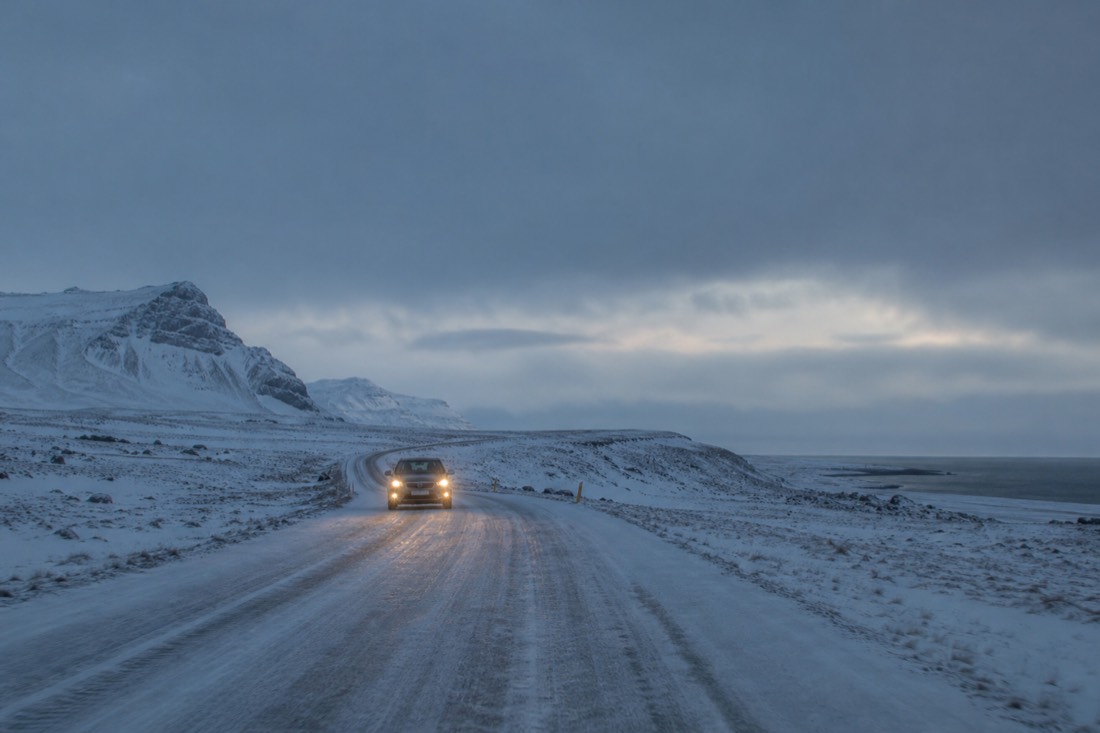
Winter is a different animal. Daylight can shrink to four or five usable hours, which means the entire 380 km each way has to happen in a tight, bright window or you are driving one of the legs in the dark on ice. Gusts come off Vatnajökull without warning and can shove a small car across a lane. The single-lane bridges that feel quaint in July become genuine hazards when the approach is glazed. I check the Icelandic Road Administration's live map at road.is obsessively on winter departures, and I will not leave Reykjavík if safetravel.is and the road service are flagging the south-east. A guided coach hands the driving to the tour operator, although weather can still delay or alter the day.
Is Jökulsárlón a realistic day trip, or should you stay overnight?
Yes, a day trip is realistic, and it is how most people do it, but it is a genuinely long day of around 14 hours with little time at the lagoon itself. An overnight near Höfn, about 80 km east, turns the same distance into two relaxed days with more time at the ice and less pressure on the drive. Which is right depends on your season and your appetite for a marathon.
I will not pretend the day trip is gentle. You give up most of a day to the road for maybe 90 minutes to two hours at Jökulsárlón and Diamond Beach combined. In summer, with endless light and low weather risk, that trade is fine and thousands make it happily. In deep winter, cramming 760 km of driving into a short-daylight day is where the trip stops being fun and starts being a risk you took to save one hotel night.
| Factor | Day trip (there and back) | Overnight near Höfn |
|---|---|---|
| Total driving in one go | ~760 km, ~10-12 h | Split across 2 days |
| Time at the lagoon and beach | ~1.5-2 h, rushed | Half a day, unhurried |
| Winter safety margin | Tight, daylight-limited | Comfortable |
| Extra cost | None beyond the trip | One night's lodging |
| Best season for it | Late spring to early autumn | Any, especially winter |
If you lean toward staying, I have mapped out the lodging options in where to stay near Jökulsárlón, and the question of how much time the sight actually deserves is its own guide: how long you need at Jökulsárlón. Höfn, the little harbour town roughly an hour past the lagoon, is the natural overnight base and turns a punishing day into a pleasant two.
What does a self-drive day to Jökulsárlón actually look like, hour by hour?
Plan for a pre-dawn alarm and a return well after dark. A realistic summer self-drive day runs roughly 07:00 to 21:00: about five hours out with photo stops, an early lunch near Kirkjubæjarklaustur, an hour and a half at the ice, then the same long haul home. Treat it as an allowance, not a fixed timetable.
The single biggest planning error is imagining the lagoon as a lunchtime arrival after a lazy start. It is not. To get meaningful time at Jökulsárlón and still drive both legs in daylight, you leave early and accept a full working day behind the wheel. Here is how I sketch a summer day for clients who insist on driving it themselves, built from the real leg times higher up this page and the stops the coach tours actually use.
| Time (approx.) | Where you are | What is happening |
|---|---|---|
| 07:00 | Leaving Reykjavík | Fuel up, coffee, onto Route 1 east |
| 08:15 | Seljalandsfoss | 30-minute waterfall stop |
| 09:30 | Vík | Leg-stretch, last big town for a while |
| 10:45 | Kirkjubæjarklaustur | Early lunch, top up the tank |
| 12:30 | Jökulsárlón | The lagoon at last, about 1.5 h here |
| 13:30 | Diamond Beach | Walk the black sand below the lagoon |
| 14:15 | Turn for home | The long drive back begins |
| 17:00 | Vík (dinner) | 45-minute food stop |
| 21:00 | Back in Reykjavík | Roughly 14 hours after you left |
Shift every number an hour later for a relaxed start and you are suddenly driving one leg in the dark, which is fine in June and a real problem in November. These times assume decent weather. Wind, a single-lane bridge queue, or a genuinely photogenic sky will each nibble at your margin, so build in slack instead of chasing the clock.
What driving mistakes do you see people make on Route 1?
The three I watch for most: starting too late, treating 90 km/h as a target rather than a ceiling, and underestimating the wind. Route 1 is a single-carriageway national road with gravel edges, blind rises, and one-lane bridges. It rewards patience and quietly punishes the driver trying to make up time.
I have guided this coast since 2022 and driven it in every month of the year, and the pattern rarely changes. People land, feel confident on the empty tarmac, and push the pace. Then a single-lane bridge appears where you slow almost to a crawl and give way, or a gust off the glacier nudges the car sideways, and the whole day tightens. The paved rural limit is 90 km/h for a reason, and on a windy day even that is too quick for a small rental.
The other quiet mistake is skipping the insurance the rental desk offers for this exact coast. Sand-and-ash protection sounds like an upsell until grit blasts across the road near Vík and pits your paint. Gravel cover is the same story. I am not selling you anything by saying this, since I do not run the coach, I just watch what goes wrong. Take the cover, check road.is before you commit to the day, and never try to beat fading light home. The ice is not going anywhere. Your one shot at a safe drive is.
Where can you refuel and stop along the route?
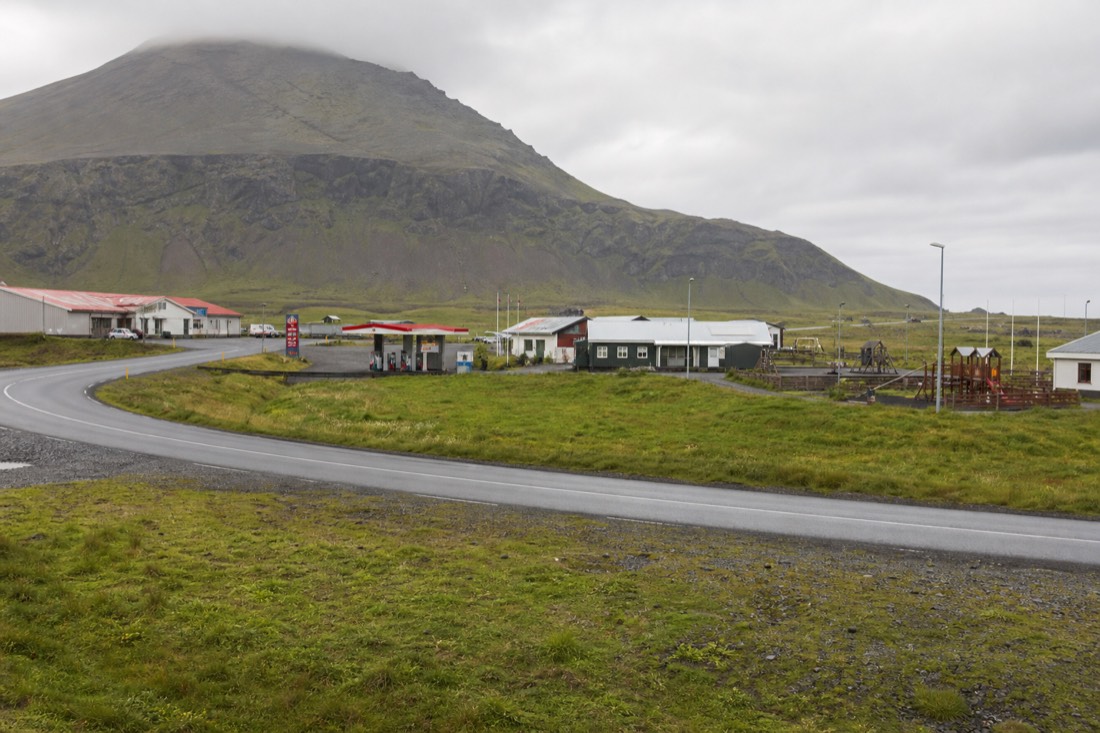
Fuel is easy for the first stretch and thins out badly toward the lagoon. Vík at about 187 km and Kirkjubæjarklaustur near 259 km are your reliable service towns. Fill up at Kirkjubæjarklaustur before the long, empty run east, because pumps close to Jökulsárlón are scarce and Höfn, about an hour past the ice, is the next real town.
Iceland's petrol stations are often unmanned card pumps, so carry a card with a working PIN. Prices sit near 217 ISK per litre nationally, among the highest in Europe, which makes the roughly 760 km round trip a genuine line in your budget rather than a rounding error. Here is where the towns fall along the drive, using the same leg distances from earlier.
| Town on Route 1 | Approx. km from Reykjavík | Its role on the drive |
|---|---|---|
| Hvolsvöllur | First hour out | Easy early fuel and a bathroom before the coast |
| Vík | ~187 km | Last sizeable service town before the thin stretch |
| Kirkjubæjarklaustur | ~259 km | Fuel and lunch, then long gaps to the east |
| Jökulsárlón | ~380 km | Your turnaround; almost no services right here |
| Höfn | ~460 km | Nearest full-service town, about 1 h past the lagoon |
The practical rule I give people is simple: never leave Kirkjubæjarklaustur below half a tank. It is not that you will run dry between there and the lagoon, it is that a detour or a weather closure can stretch the distance, and there is no comfort in coasting on fumes across a lava field with patchy phone signal.
What should you pack for a 14-hour day to the lagoon?
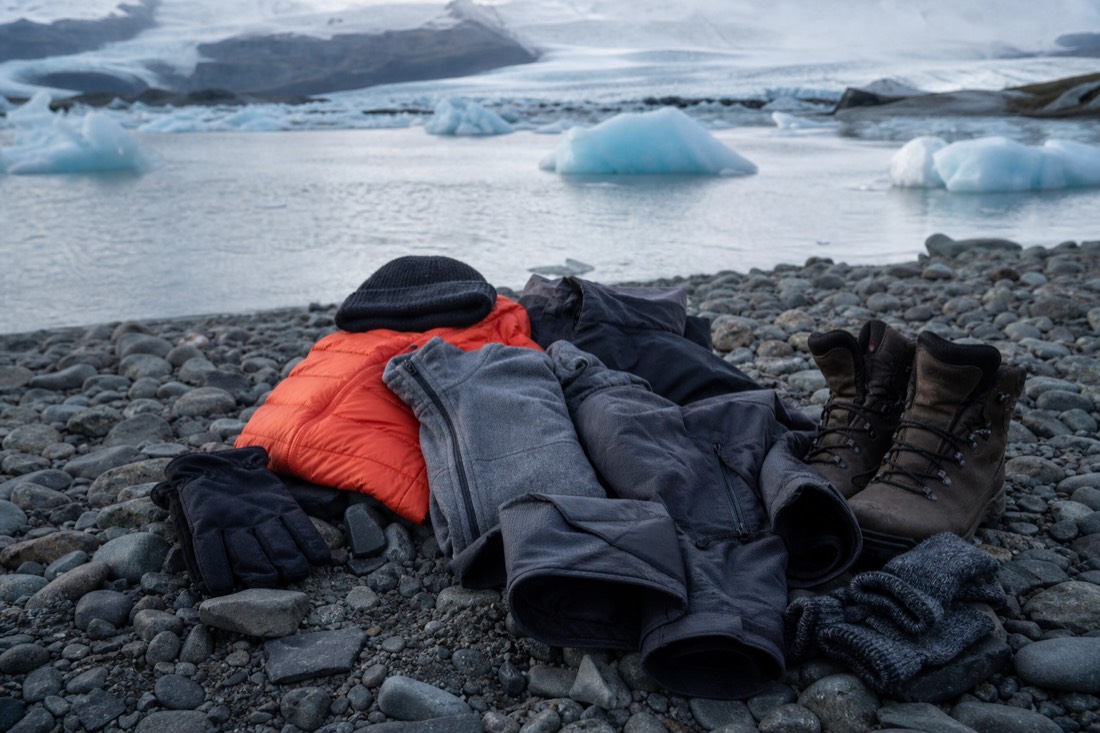
Pack for a day that starts before dawn, swings 380 km east, and turns cold and windy at the ice even in summer. The essentials: a windproof layer, a warm hat and gloves, grippy shoes for the black sand, snacks and water, a full phone battery, and a payment card for fuel. Everything past that is comfort.
The lagoon sits at the foot of Vatnajökull, and the air rolling off the glacier is colder than the drive ever suggests. Visitors step out at Diamond Beach in a light jacket and last about ten minutes. This is a planning list from years of watching people get caught out, not an operator's packing sheet, so tune it to your own season and tolerance.
| What to bring | Why it earns its place | Matters most in |
|---|---|---|
| Windproof shell + warm mid-layer | Wind off the glacier bites year-round | All seasons |
| Hat and gloves | Hands go numb fast on the beach | Autumn to spring |
| Waterproof, grippy shoes | Black sand is wet and slick underfoot | All seasons |
| Snacks and a water bottle | Service gaps between towns run long | All seasons |
| Power bank or car charger | Maps and photos drain a phone fast | All seasons |
| Card with a PIN | Unmanned fuel pumps demand it | All seasons |
| Sunglasses | Glare off ice and a low sun | Summer, bright winter |
If you are on the guided coach, this list shrinks to layers, shoes, snacks, and a charged phone, because the driving, the fuel, and the timing stop being your problem. That is the quiet luxury of handing off the day: you pack for the ice, not for the road.
How different is the day in summer versus winter?
The distance never changes; the light does. Summer hands you a near-endless window, so even a late start still gets you home safely. Winter can shrink usable daylight to four or five hours, which means the whole 380 km each way must thread a tight bright window or you drive part of it on ice in the dark.
I plan the two seasons almost as different trips. In June the sun barely sets, weather risk is low, and the only real enemy is fatigue after ten hours at the wheel. In December the same route demands a pre-dawn departure, constant checking of road.is and safetravel.is, and the discipline to abandon the day if the south-east is flagged. Here is how the seasons compare on the things that actually shape the drive.
| Factor | Summer | Winter |
|---|---|---|
| Usable daylight | Around 18-21 h, huge margin | Around 4-5 h, very tight |
| Best departure | Early, but flexible | Pre-dawn, non-negotiable |
| Main hazard | Driver fatigue | Ice, wind, closures |
| Road surface | Clear tarmac | Ice and packed snow likely |
| Single-lane bridges | Simple give-way | Glazed approaches, go slow |
| Sensible default | Self-drive works well | Lean toward a guided coach |
None of this turns winter into a no. The lagoon under low winter light, with a chance of aurora once it is dark, is worth the extra care. It just means the season sets how much margin you have, and in the dark months the honest answer for most visitors is to let a professional on winter-rated tyres do the driving.
So which option should you actually pick?
If you are a confident driver in summer with a full day and someone to split the rental, self-driving gives you the most freedom. For everyone else, especially solo travellers, winter visitors, and anyone who would rather look out the window than watch the road, the guided coach is the sane choice. It absorbs the 380 km, the winter risk, and the fatigue for one seat price.
Most of my clients arrive having half-decided to rent a car, then reconsider once the distance sinks in. There is no shame in handing off a 14-hour driving day to a professional. If that is you, book the guided Jökulsárlón & Diamond Beach day trip and check live availability and prices on GetYourGuide. It is a bus trip with a live guide, and Reykjavík pickup depends on the option selected, so confirm the meeting point and current cancellation terms before booking.
Whichever way you go, respect the number that started all this. Three hundred and eighty kilometres each way is not a detail, it is the trip. Plan the drive honestly, watch the forecast, and the ice at the end will be worth every one of them.
Your Next Step
Choose who handles the drive
Initial editorial suggestion. Confirm your date and party requirements with the operator.
Have a travel date in mind? Check the guided Jökulsárlón and Diamond Beach trip before fixing your rental, pickup point or wider South Coast plan.
Ages 6+. Allow for delays. Meals are extra; glacier hiking and ice-cave visits are separate experiences.
Refine Your Choice And View Alternatives
Reykjavik: Jokulsarlon Glacier Lagoon & Diamond Beach Tour
14-hour coach trip from Reykjavík with an English-speaking guide, Jökulsárlón and Diamond Beach stops. Pickup and the seasonal boat ride depend on the booked option.
This tool compares tour formats, meeting points, listed ages, seasonal windows and duration. Seasonal guidance is not live availability. It does not confirm availability or personal suitability. Local activities do not include the drive from Reykjavík; leave extra time for travel and check-in.
Reykjavík: 2-Day Tour with Icebergs, Glaciers & Waterfalls: Two days from Reykjavík with an English-speaking guide, one ensuite overnight stay and breakfast; visits the South Coast and Jökulsárlón. Ages 10+. Requires two full days; lunch and dinner extra. Glacier hike and boat cruise depend on the option you book. Not wheelchair accessible. Overnight lodging is operator-selected; a specific lagoon-side hotel or dawn visit is not promised.