Is Diamond Beach Always Covered in Ice?
Some mornings the black sand glitters with stranded bergs. Some afternoons it is almost bare. Here is why, and how to load the dice in your favour.
 Written with Björn Einarsson, Iceland South Coast & glacier-lagoon tour guide and local specialist
Short answer
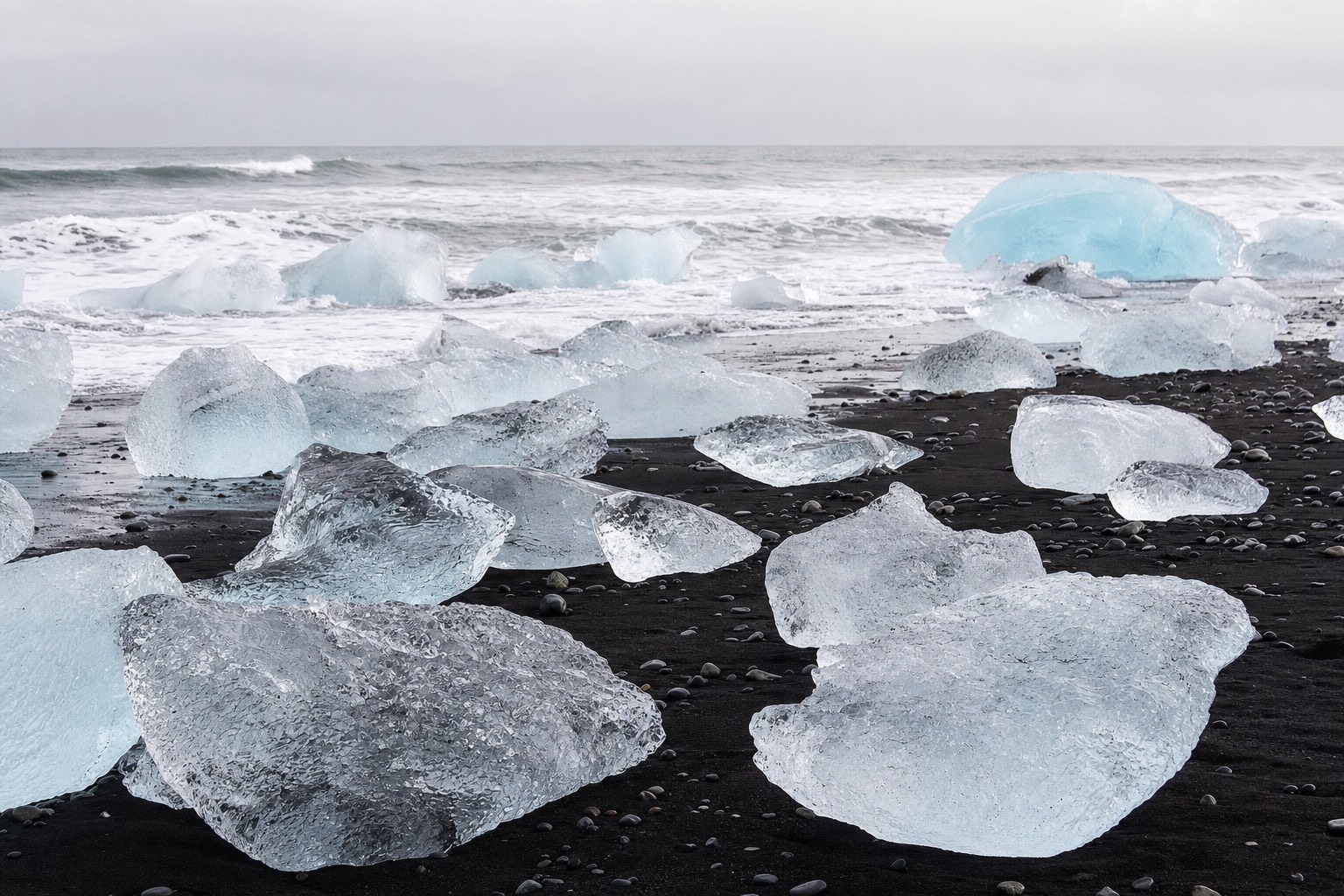
No. Diamond Beach is not always carpeted in ice. The amount changes daily and even hourly, driven by how much the glacier is calving into Jökulsárlón and how the tide drags bergs out to sea and washes them back. Some days the sand is packed, others nearly empty.
The first time a traveller asked me why the beach was "empty," I had to laugh, because we were standing on maybe a dozen bergs the size of armchairs. They had seen a photo online of sand so thick with ice you could barely find the black, and by that yardstick our morning looked bare. That gap, between the postcard and the real thing, is the single biggest thing to get straight before you come. The ice here is not a fixed feature. It arrives, it melts, it gets hauled back out to sea, and it comes again on the next tide.
Is Diamond Beach always covered in ice?
No. Diamond Beach is not permanently blanketed in ice, and no honest guide will promise you it will be. The quantity shifts by the day and even the hour, set by how actively the glacier is calving into Jökulsárlón and how the tide moves bergs out to sea and strands them on the sand. You might find it packed or nearly bare.
I want to kill the myth early, because it sets up disappointment. The images that go viral show the beach at its absolute best, on a day when calving, tide, and wind lined up to strand a heavy load of ice on the black sand. That happens. It just does not happen on demand, and it is not the default state of the beach. On a run of cold, still days with little glacier movement, the outflow slows and the sand can look sparse.
The flip side is the hopeful part. Because the tide resets the scene every few hours, an empty-looking beach in the morning can fill through the afternoon. I have watched exactly that: a thin scatter of ice at ten, a proper field of bergs by two. So the right frame is not "will there be ice," which is close to always some, but "how much, and when." The rest of this guide is about stacking that in your favour.
What actually determines how much ice ends up on the beach?
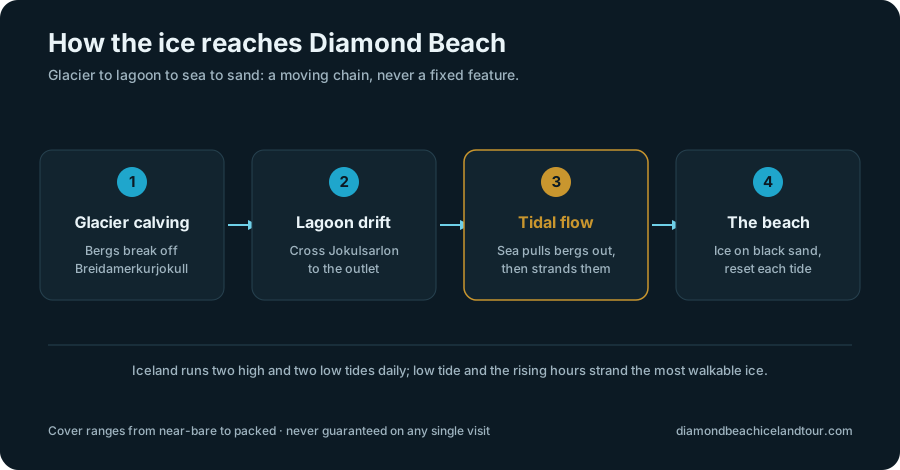
Two engines drive it. First, calving: bergs have to break off Breiðamerkurjökull and drift across Jökulsárlón before they can reach the sea at all. Second, the tide: the sea carries those bergs out through a short river mouth and then pushes them back onto the sand. Wind and swell fine-tune where they land.
Think of it as a supply chain with the glacier at one end and the beach at the other. Nothing washes up unless ice first calves off the glacier tongue and floats down the lagoon. That lagoon, Jökulsárlón, is Iceland's deepest lake, and it keeps growing as the glacier retreats, which is a big reason the supply of bergs has stayed reliable over the years. The Vatnajökull National Park pages are a good primer on the glacier system feeding the whole scene.
Then geography does something unusual. The lagoon connects to the ocean by an astonishingly short outlet river, only a few hundred metres of water separating fresh glacier ice from open sea. Bergs float out on the ebb, the surf batters them, and the flood tide flings the survivors back up the black sand as the "diamonds." It is a genuinely tidal beach, not a static gallery, which is why timing beats luck here.
| What drives the ice | How it works | What it means for your visit |
|---|---|---|
| Glacier calving | Ice breaks off Breiðamerkurjökull into the lagoon | No calving, no fresh supply of bergs downstream |
| Lagoon drift | Bergs cross Jökulsárlón to the outlet | Bigger, more active lagoon means more ice in transit |
| Tidal flow | Sea pulls bergs out, then strands them on the sand | The single biggest hour-to-hour variable |
| Wind and swell | Push stranded ice higher or scour it away | A strong offshore wind can strip the beach |
Does the tide really change the beach within a few hours?
Yes, and it is the factor you can most easily plan around. Iceland runs two high and two low tides a day, so the beach restocks and clears on that cycle. Low tide, and the hours around a rising tide, tend to expose and deliver the most stranded ice. Check a tide table for the day before you lock in your timing.
This is the practical heart of the whole question. People fixate on season, but on any single visit the tide state matters more than the month. When the sea is on its way out or sitting low, bergs that have washed in get left high on the sand where you can walk among them. When the tide floods in, some of those same pieces float off again, and the beach can look thinner even on a day with plenty of ice offshore.
So if you have any control over your arrival window, spend two minutes on a tide forecast for that date and aim for the low-tide side of the clock. On a guided coach you will not control the exact hour, but you can still read the beach when you get there: walk toward wherever the ice is stranding, and give it time, because the next set of waves may deliver more. The odds below are rules of thumb, not guarantees, since wind and calving still get a vote.
| Time of day / tide state | Odds of a good ice display | Why |
|---|---|---|
| Low tide, or the hours around it | Best | Bergs sit stranded and walkable on exposed sand |
| Incoming tide after a low | Good | Fresh ice pushed up as the water rises |
| High tide | Mixed | Some stranded ice refloats; scene can thin out |
| After a big offshore-wind spell | Poor | Wind can scour bergs back out to sea |
Is there more ice on Diamond Beach in winter or summer?
Both seasons deliver, but differently. Warmer months bring more melt and calving, so plenty of fresh bergs feed through the system in summer. Winter ice tends to be denser, bigger, and more vividly blue, with fewer crowds and a northern-lights chance after dark. Neither season guarantees a full beach on a given day: tide still rules the hour.
Here is where I push back gently on a common assumption. A lot of people expect ice to mean winter, and winter certainly serves up the most dramatic, glass-blue bergs I have seen. But the glacier calves hardest when it is warmer, so summer is far from ice-free, and the sand can be busy with pieces even in July. The difference is character more than quantity: summer ice is often smaller and quicker to melt, winter ice slower, harder, and more sculptural.
Season also changes everything around the ice, which matters for how the day feels. Long summer daylight makes the drive and the photography easy but stacks the midday crowds. Winter shrinks the daylight to a narrow window and can throw weather at the long Route 1 drive, though it hands you the aurora as a bonus. If nailing the timing is your real question, my full breakdown of the best time to visit Diamond Beach walks through the season trade-offs properly.
| Season | Ice on the sand | Berg character | Trade-off |
|---|---|---|---|
| Summer (Jun–Aug) | Often plentiful, more melt | Smaller, quick to shrink | Easy travel, heaviest crowds |
| Autumn (Sep–Oct) | Building, variable | Fresh, varied colours | Balanced daylight, easing crowds |
| Winter (Nov–Mar) | Variable, can be huge | Dense, deep blue, sculptural | Short days, aurora chance, weather risk |
| Spring (Apr–May) | Moderate, variable | Clear and blue, mid-size | Lengthening light, roads improving |
How can you improve your odds of seeing ice?
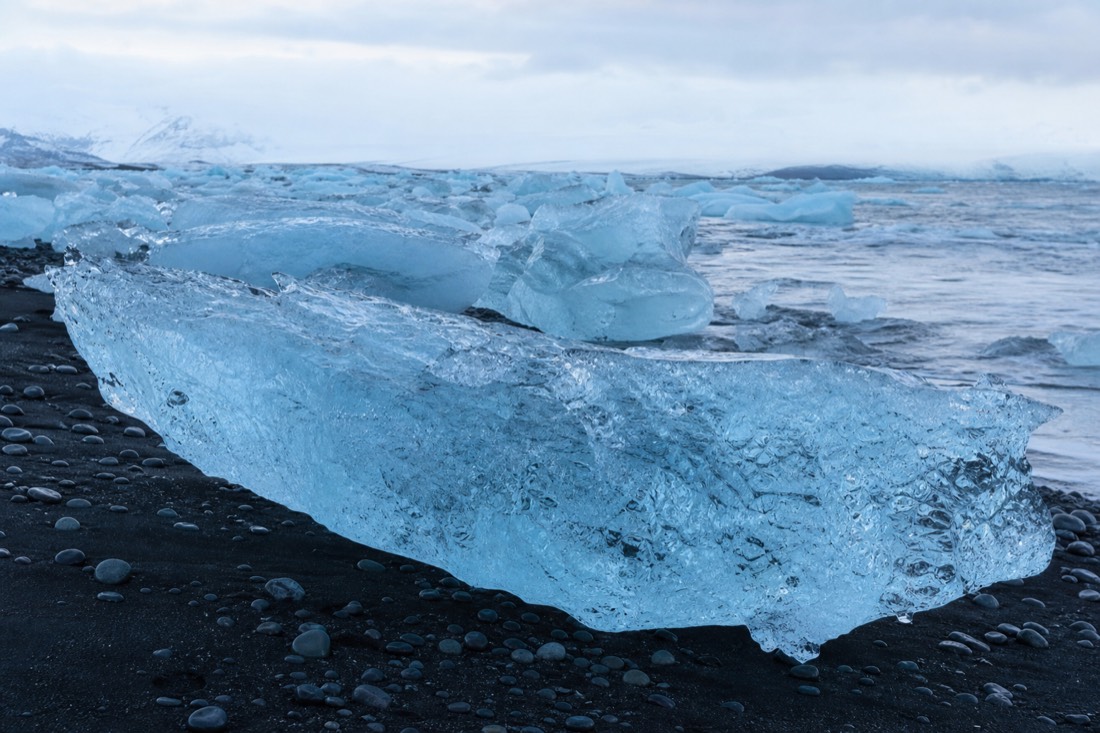
Stack the small edges in your favour: check the tide table and aim for low tide, give yourself margin so you can wait out a thin patch, and don't judge the beach in the first five minutes. On a guided day, use the drive to watch conditions and read the lagoon's calving activity before you reach the sand.
None of these guarantees a packed beach, but together they meaningfully raise your chances of a good one. The biggest mistake I see is people arriving with a fixed photo in their head, glancing at the sand, deciding it is "not as good as the pictures," and walking back to the coach after ten minutes. Wait. Walk the length of the beach toward wherever the surf is stranding ice. The scene you get at the end of your visit is often not the one you got at the start.
Pairing the beach with the lagoon on the same trip is the other quiet advantage, because you get two shots at ice on one day. If the beach is quiet, Jökulsárlón itself is usually thick with bergs, and vice versa. That is a strong argument for the full day trip rather than a rushed solo dash. If the routing and timing side appeals, book the guided Jökulsárlón & Diamond Beach day trip and check live availability and prices on GetYourGuide. It runs as a large-group coach with a live guide and free cancellation up to 24 hours before, which is genuinely useful when Icelandic weather can turn a plan overnight. It currently holds 4.7 stars across 3,910 GetYourGuide reviews. For a fuller sense of the place on a normal, non-viral day, read what Diamond Beach is actually like.
Why you shouldn't bank on one specific look
Treat any single photo you have seen as one frame from a scene that never holds still. Go for the experience of ancient glacier ice on black sand, in whatever quantity the day serves, rather than to reproduce an exact image. That mindset is the difference between a great visit and a let-down over conditions nobody controls.
I say this as someone who reads this coast for a living: the travellers who leave happiest are the ones who came curious rather than with a shot list. The beach is a living edge between a glacier and the ocean, and its whole appeal is that it is temporary and different every time. Guide to Iceland makes the same point, that the ice is never guaranteed and the display resets with the tide, and that honesty is worth carrying with you.
So, is Diamond Beach always covered in ice? No, and knowing that is a gift, not a warning. It frees you to enjoy whatever the tide hands you on your day, and to work the small levers, timing, patience, a walk down the sand, that tilt the odds. If you are still weighing whether the long haul earns its keep at all, my honest take on whether Diamond Beach is worth it lays out the full trade. Come for the living edge of a glacier meeting the sea, and let the beach be exactly as much as it wants to be that afternoon.
Your Next Step
Choose by starting point and preferred ice experience
Initial editorial suggestion. Confirm your date and party requirements with the operator.
Have a travel date in mind? Check availability, pickup options, and the approximately 14-hour schedule before arranging the rest of your South Coast plans, remembering that no tour can guarantee the beach’s ice cover.
Ages 6+. Allow for delays. Meals are extra; glacier hiking and ice-cave visits are separate experiences.
Refine Your Choice And View Alternatives
Reykjavik: Jokulsarlon Glacier Lagoon & Diamond Beach Tour
14-hour coach trip from Reykjavík with an English-speaking guide, Jökulsárlón and Diamond Beach stops. Pickup and the seasonal boat ride depend on the booked option.
This tool compares tour formats, meeting points, listed ages, seasonal windows and duration. Seasonal guidance is not live availability. It does not confirm availability or personal suitability. Local activities do not include the drive from Reykjavík; leave extra time for travel and check-in.
Jökulsárlón: The Original Ice Cave Tour on Vatnajökull: Around 2.5–4 hours from Jökulsárlón, with an English-speaking glacier guide, modified 4x4 transport and safety equipment. Ages 10+. A cave is not guaranteed: the route may visit a blue-ice canyon, tunnel or other feature. Requires general fitness and uneven-ground walking; not suitable for mobility impairments.
Jökulsárlón Glacier Lagoon Kayaking Tour: A 1.5-hour guided paddle from the Jökulsárlón parking area, with a two-piece suit, sit-on-top kayak and equipment. English-speaking guide. Ages 14+, able to swim and comfortable in water. Not suitable for back or heart problems or those prone to seasickness. Arrive 20 minutes early; no Reykjavík transfer.