The Five-Hour Drive to the Glacier Lagoon: Is the Long Day Worth It?
An Icelandic guide's honest take on the ~14-hour day trip to Jökulsárlón: the real cost of the drive, the real payoff, and who should skip it.
 By Björn Einarsson, Iceland South Coast & glacier-lagoon tour guide and local specialist
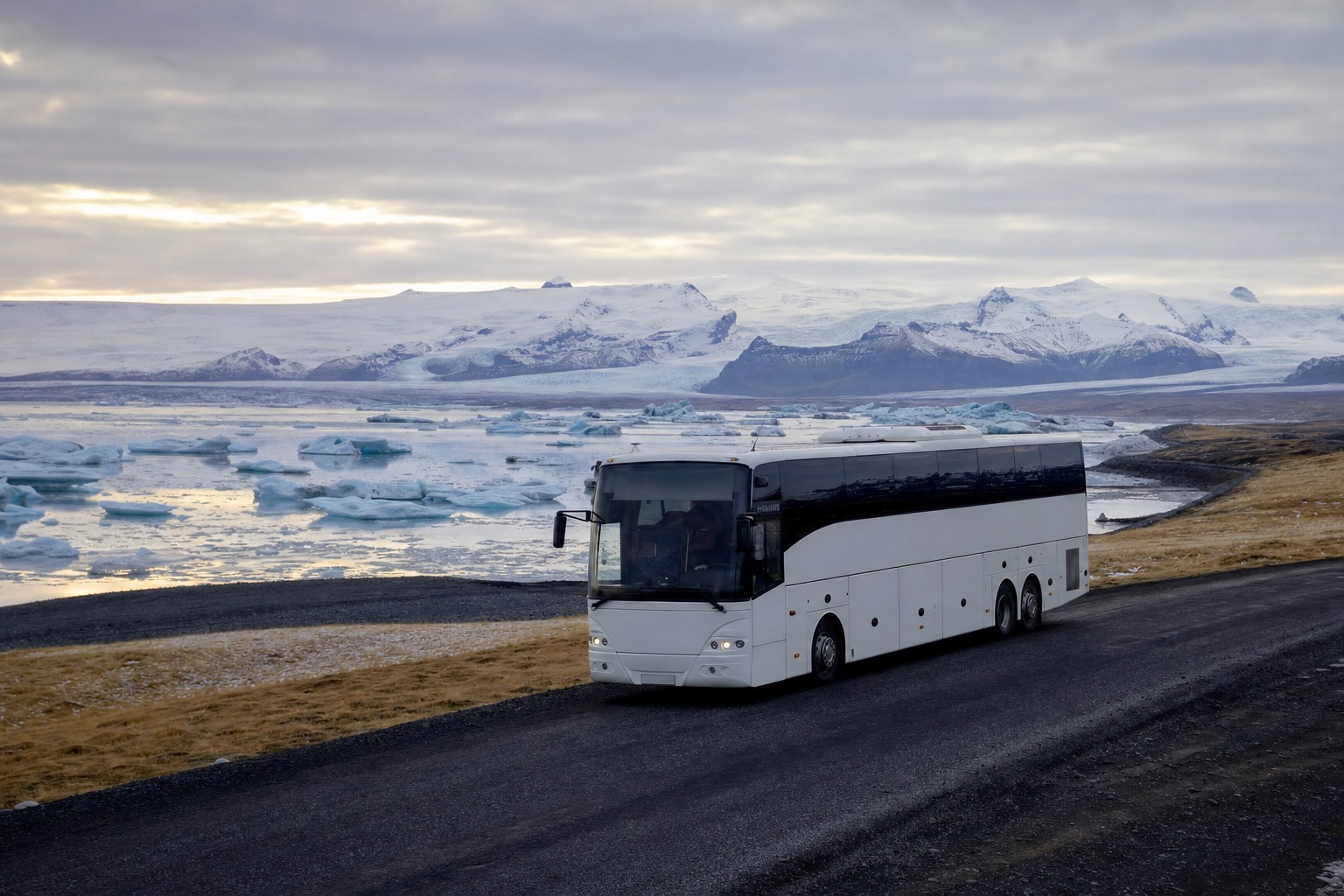
People book this trip and then panic a little when they read the small print. Fourteen hours. Five to six of them just watching the south coast slide past a coach window, then the same distance back in the dark. I have driven that road more times than I can count, in August drizzle and February whiteout, and I understand the hesitation completely. The lagoon sits about 380 kilometres from Reykjavík, out where Vatnajökull spills down toward the sea, and there is no shortcut to it. So the real question is not whether Jökulsárlón is beautiful. It is whether ten hours in a seat buys you enough of it.
Let me answer that the way I would if you asked me at the coach door, honestly, without the brochure gloss.
How long is the day trip to Jökulsárlón, really?
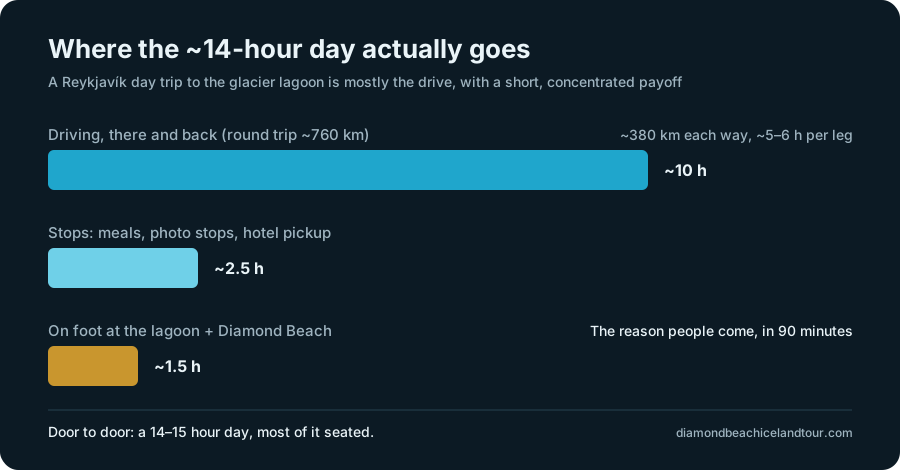
Plan for a 14 to 15 hour day, door to door. The drive alone is roughly five to six hours each way over about 380 kilometres, so most of your waking hours are spent moving. You get somewhere around 1.5 hours standing at the lagoon and Diamond Beach, plus shorter stops at waterfalls and villages on the route.
The number that surprises people is not the total. It is the ratio. On a guided day like this you are in the coach far more than you are out of it, and no operator can change that without leaving the lagoon out. What you can do is set your expectations before you climb aboard, because a trip framed as "a long drive to a short, extraordinary payoff" lands very differently than one you thought would be a leisurely amble.
Here is a realistic shape of the day. Exact times shift with season, traffic, and how an operator sequences the stops, so treat this as the rhythm rather than a timetable.
| Rough time | Where you are | Roughly how long |
|---|---|---|
| 07:30 – 08:00 | Reykjavík pickup, hotels and bus stops | 30–45 min collecting |
| 08:00 – 10:30 | Drive east, first comfort break near Hvolsvöllur | ~2.5 h driving |
| 10:30 – 11:00 | Seljalandsfoss photo stop | ~30 min |
| 11:00 – 13:30 | Drive on, lunch stop near Kirkjubæjarklaustur | ~2 h + lunch |
| 13:30 – 15:00 | Jökulsárlón glacier lagoon and Diamond Beach | ~1.5 h on foot |
| 15:00 – 18:00 | Long drive back west | ~3 h |
| 18:00 – 18:45 | Dinner stop at Vík | ~45 min |
| 18:45 – 21:30 | Final leg to Reykjavík, often after dark | ~2.5 h |
Two things jump out of that table. The lagoon window is short, and the return leg is where the tiredness catches you. If you want the full reasoning on the on-site time, I unpack it in how long you actually need at Jökulsárlón.
Is five hours in a coach each way too much for one day?
It depends entirely on how you travel. If you can read, doze, and watch scenery without getting restless or carsick, the drive is genuinely part of the reward. If long transit drains you or you are travelling with small children, ten hours of seat time in a single day is a lot to ask, and a slower plan serves you better.
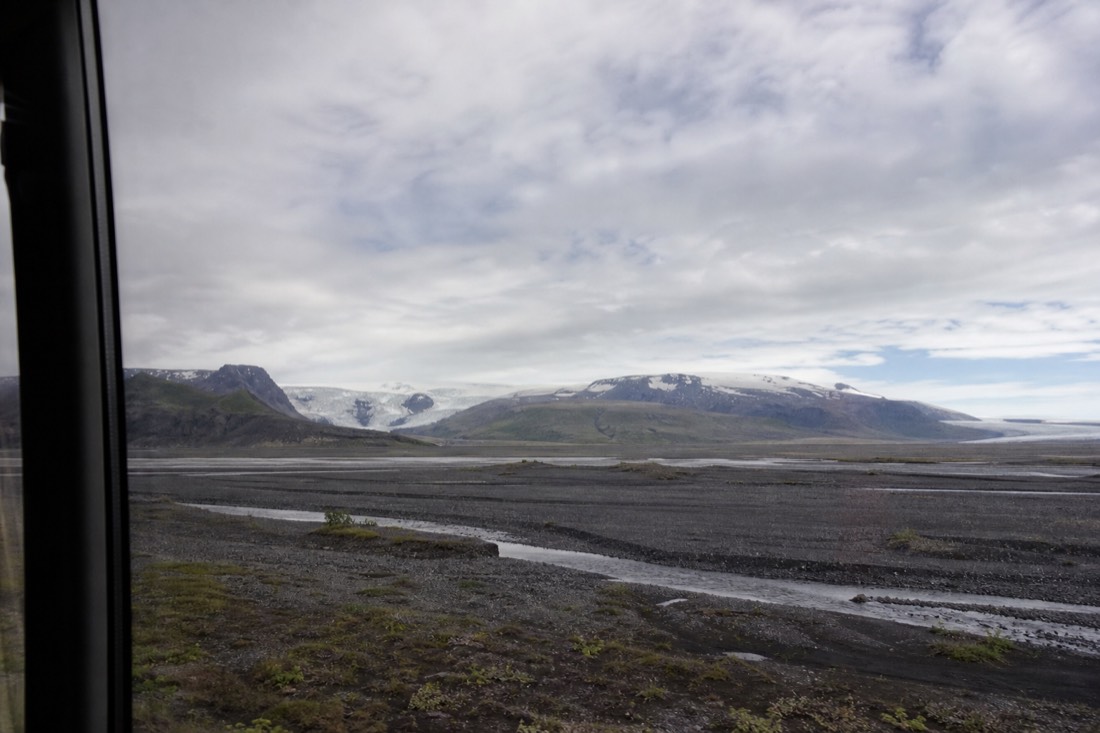
I want to be fair to both sides, because the honest answer is not one-size-fits-all. The south coast is not empty motorway. You pass under Eyjafjallajökull, past the black cliffs near Vík, across the vast Skeiðarársandur outwash plains where the horizon just keeps running. On a clear day I have watched an entire coach go quiet at the first sight of the glacier tongues coming down off Vatnajökull. That is not dead time. That is the film playing outside the glass.
The flip side is real too. The winding stretches can unsettle a sensitive stomach, the light in winter fails by mid-afternoon so part of the drive home is in full darkness, and by hour twelve even the scenery lovers are ready to be still. Visitors on r/VisitingIceland describe this pattern again and again: the day is worth it, and the return leg feels twice as long as the outbound one. Both halves of that sentence are true.
Who should do the long day, and who should skip it?
The guided long day suits time-pressed travellers, nervous winter drivers, and anyone happy to trade seat time for a stress-free run to a bucket-list sight. It suits far less well those with very young kids, strong motion sickness, or a couple of weeks to spend, who would be better served staying a night out east.
The single biggest factor is how much time you have in Iceland. If you have four days and want to see the glacier lagoon, a day trip is the only sensible way to do it. If you have ten, driving all that way and back in one shot starts to look like a waste of the coast you are speeding past.
| Good fit for the long day | Reconsider the long day |
|---|---|
| Short trip, one shot at the lagoon | Two weeks or more to explore slowly |
| Nervous about winter Route 1 driving | Travelling with toddlers or under-fives |
| Happy to relax and be driven | Prone to serious motion sickness |
| Want a guide reading the landscape | Want unhurried hours at the lagoon |
| No rental car or no winter-driving cover | Keen to also see the highlands, east fjords |
That guided-versus-driving distinction matters more than people expect in the colder months. Route 1 can close at short notice for wind or ice, and conditions change fast; the official road conditions map at road.is and the safety guidance on safetravel.is exist precisely because visitors underestimate how quickly a clear morning turns. A coach with a local driver removes that whole category of worry. If you are weighing it up, I go deeper in self-drive versus a guided tour to Jökulsárlón.
Is it better to drive yourself or stay overnight near the glacier lagoon?
For most first-timers on a tight schedule, the guided day trip wins on effort and winter safety. If you have three or more days to spare, an overnight near Höfn or the lagoon turns a punishing round trip into two comfortable ones and buys you sunrise light on the ice. Neither is wrong; they answer different trips.
Here is the comparison I actually give people, laid out plainly. The overnight option is the quiet secret of this region: the same drive, halved, with the lagoon lit differently at each end of the day.
| Guided day trip | Self-drive day trip | Overnight near the lagoon | |
|---|---|---|---|
| Driving load on you | None | ~10–12 h at the wheel | Two relaxed half-days |
| Time at Jökulsárlón | ~1.5 h | Flexible, weather-dependent | Hours, plus sunrise/sunset |
| Winter risk | Handled by driver | On you | Reduced per leg |
| Best for | Short trips, no car | Confident drivers | 3+ day itineraries |
| Extra cost | Tour price only | Fuel, car, insurance | Plus one night's lodging |
If your trip is short and the winter roads make you uneasy, the guided coach is the pragmatic pick, and you can book the guided Jökulsárlón & Diamond Beach day trip and then check live availability and prices on GetYourGuide to see which dates are still open. It carries 4.7 stars across 3,910 GetYourGuide reviews, which tells you plenty of people made this long day and came back glad they did.
How do you make the long day to Jökulsárlón easier?
Eat a real breakfast, sit near the front if you get carsick, keep a water bottle and a snack within reach, and treat the coach as rest rather than dead time. Dress for a windy lagoon even in summer, and accept that the drive home is for dozing, not sightseeing. Small preparation turns a gruelling day into a manageable one.
The people who struggle are almost always the ones who treated it like a casual outing. Motion sickness is the one I see most, and it is very solvable: a seat toward the front, eyes on the horizon instead of a phone, and a tablet taken before departure rather than after the queasiness starts. If you are the type who overheats or chills easily, layers matter, because the coach is warm and the lagoon shore, where the wind comes straight off the ice, is not.
One more piece of honesty about the lagoon itself. Your 1.5 hours there splits between the water and the black sand, and they sit a short walk apart, so decide in advance where your priority is. The floating icebergs on the lagoon and the stranded ones glittering on the beach are two different experiences, and rushing both leaves you satisfied with neither. My take on whether the beach earns the detour lives in is Diamond Beach worth it. Keep well back from the water's edge on both sides; the safety warnings on safetravel.is about sneaker waves and rolling icebergs are not decoration.
So, is the long day to Jökulsárlón worth it?
Yes, for most people making the trip once. The drive is long and the lagoon window is short, but the sight of thousand-year-old ice drifting toward the sea is one of very few things in Iceland that genuinely lives up to the photographs. Go in knowing it is a big day, prepare a little, and the ten hours of coach fade behind the ninety minutes at the ice.
I will not pretend the arithmetic is flattering on paper. Ten hours of driving for an hour and a half of standing still sounds absurd until you are the one standing still, watching a blue-white berg the size of a house turn slowly in water that has never known a warm day. That is the moment the day pays out. The travellers who regret it are usually the ones who were exhausted before they started or who had the time to do it slower and chose not to.
If your trip is short and you want the glacier lagoon in it, take the long day and let a driver carry the load. If your trip is long, give the region an overnight and thank yourself at sunrise. Either way, the ice is worth the road. It just asks you to earn it.
Your Next Step
Find out whether the Reykjavík coach day fits your trip
Initial editorial suggestion. Confirm your date and party requirements with the operator.
Have a travel date in mind? Check the Reykjavík departure and pickup option before arranging the rest of your south-coast plans.
Ages 6+. Allow for delays. Meals are extra; glacier hiking and ice-cave visits are separate experiences.
Refine Your Choice And View Alternatives
Reykjavik: Jokulsarlon Glacier Lagoon & Diamond Beach Tour
14-hour coach trip from Reykjavík with an English-speaking guide, Jökulsárlón and Diamond Beach stops. Pickup and the seasonal boat ride depend on the booked option.
This tool compares tour formats, meeting points, listed ages, seasonal windows and duration. Seasonal guidance is not live availability. It does not confirm availability or personal suitability. Local activities do not include the drive from Reykjavík; leave extra time for travel and check-in.
Reykjavík: 2-Day Tour with Icebergs, Glaciers & Waterfalls: Two days from Reykjavík with an English-speaking guide, one ensuite overnight stay and breakfast; visits the South Coast and Jökulsárlón. Ages 10+. Requires two full days; lunch and dinner extra. Glacier hike and boat cruise depend on the option you book. Not wheelchair accessible. Overnight lodging is operator-selected; a specific lagoon-side hotel or dawn visit is not promised.